TURN YOUR IDEAS INTO WRITING
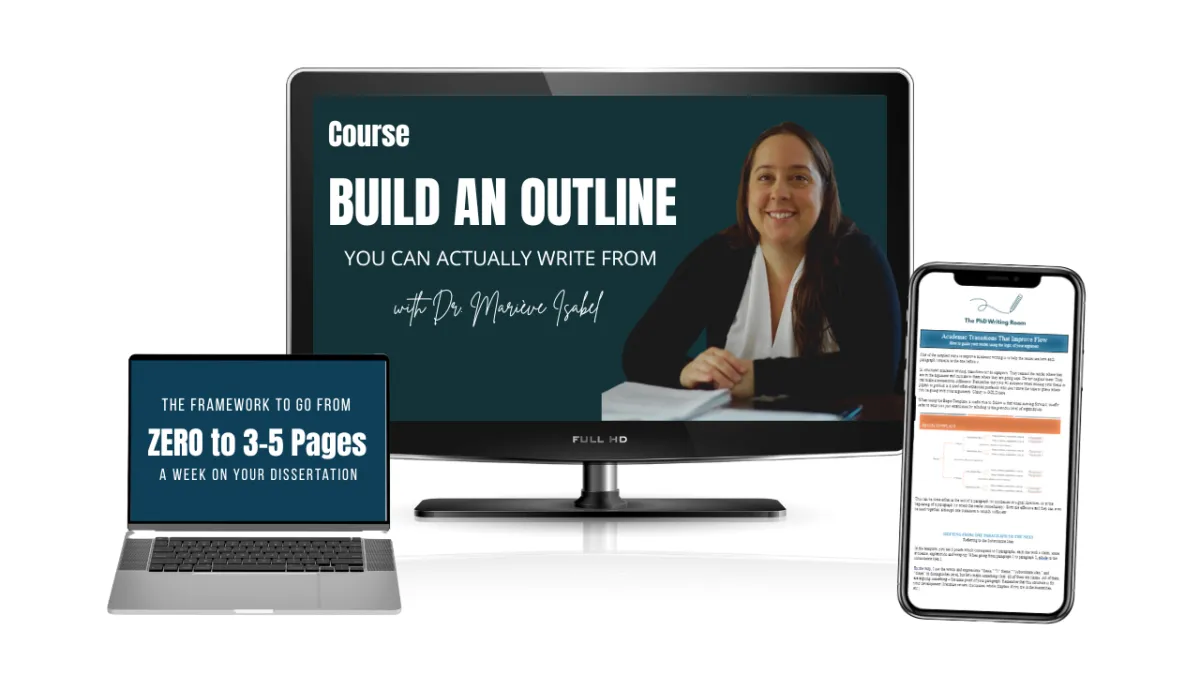
Steal the step-by-step framework to structure a chapter or a section of your paper or dissertation, so you can start writing immediately (today if you want)
without ending with 30-page outlines that look like grocery lists and that only overwhelm you and make you feel lost.
This Framework Will Help You:
Create a clear structure you can actually write from: So you can stop reorganizing your outline and start drafting real paragraphs.
Turn scattered notes and data into a logical argument: So your chapter flows naturally and your reader always knows where you’re going.
Start writing sooner than you thought possible: So progress happens this week, not someday when everything finally feels clear (it won't).
How This Framework Started Helping
Students Get Unstuck
Here's what they changed:

For years, I worked with graduate students who had the same problem.
They weren’t lazy.
They weren’t unmotivated.
They weren’t incapable of writing.
They were stuck because they had too much material and no clear structure to turn it into writing.
They had notes, highlights, and long outlines, but no roadmap.
As soon as they learned how to structure their ideas differently, something changed.
They stopped reorganizing.
They stopped overthinking.
They started writing.
Sometimes the same day.
Not because they forced themselves to write more.
But because they finally knew what to write next.
Who This Is For:
Graduate students writing a thesis or dissertation:
For students who have data, readings, or ideas but don’t know how to turn
them into a structured chapter.
Students stuck at the outlining stage:
For writers who keep reorganizing their plan but never feel ready to write.
Students overwhelmed by too much material:
For anyone who feels lost in notes, articles, or arguments and needs a clear direction.
Academic writers working on papers or articles:
For writers who want a clear structure that makes writing faster and easier.
The Slowest Way to Start Writing a Chapter
Create longer and longer outlines hoping clarity will come: this creates confusion, not structure. Your outline grows, but your writing doesn’t.
Keep reorganizing your plan every time you read something new: this keeps you busy but prevents progress.
Wait until everything feels perfectly clear before writing: this delays writing indefinitely.

Many students believe that they need to plan more, read more, analyze more,
instead of structuring better. That’s why starting to write feels so hard.
I want to show you a much better way.
WHAT YOU GET:
THE VAULT INCLUDES:

Introduction + 6 Clear, Step-by-Step Video Lessons:
Short, focused lessons that show you exactly how to structure a chapter or section so it’s ready to write. The course is 1 hour long in total, plus the time it will take you to do some practice.

The Plug-and-Play Structure Template:
A ready-to-use framework that helps you organize ideas, arguments, and paragraphs without starting from scratch. You'll be ready to get to work right away.

Examples and Walkthroughs:
See exactly how ideas turn into structure, and how structure turns into writing. Once you have an outline, you're not just ready to write; you have started writing already.

A Method You Can Reuse for Any Chapter or Section:
This outline is versatile and can be use in all disciplines, and for various types of writing, including literature reviews, discussions, papers, whole chapters, and more.
REGULAR PRICE: $197
TODAY'S PRICE: $44
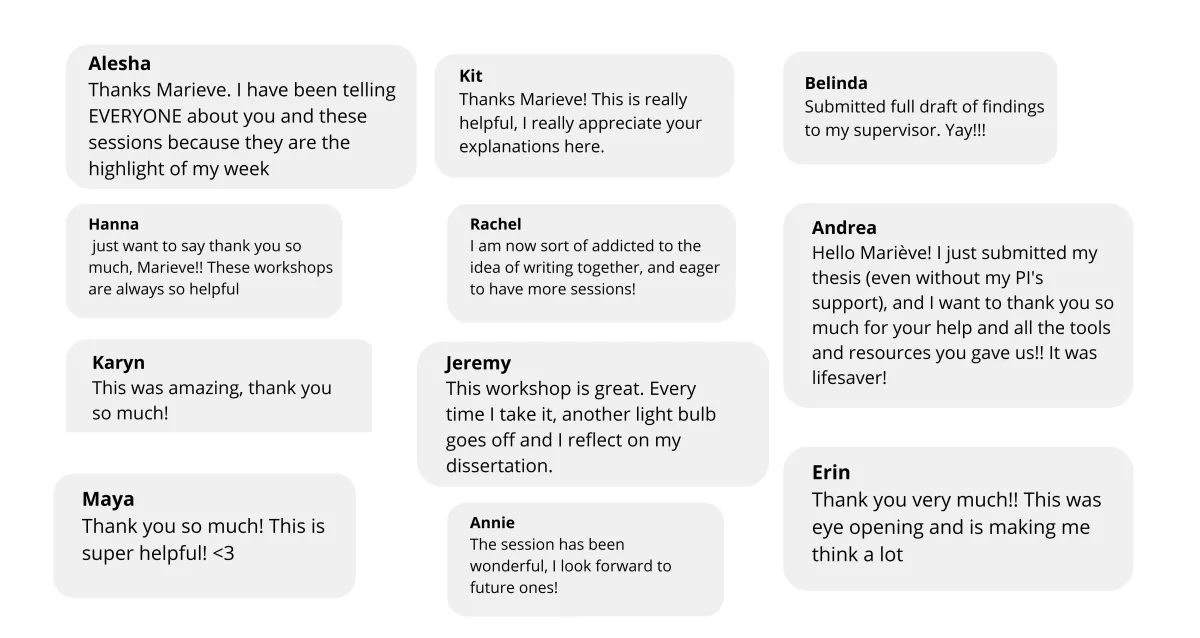
Our Students Love
Our Courses!
A CLEAR STRUCTURE SOLVES
90% OF WRITING BLOCK
Ok, this is not a verified statistic. But we truly believe that having a strong structure, thanks to an efficient outline, can help you solve many problems.
Feeling stuck:
A clear structure removes the paralysis of not knowing where to begin.
Overwhelm from too much information:
When your ideas are organized logically, writing becomes much easier.
Slow progress:
Knowing exactly what to write next dramatically speeds up writing.
Losing confidence:
Clarity builds momentum and momentum builds confidence.
MEET YOUR INSTRUCTOR
Mariève Isabel, PhD

When I was working on my own research and later teaching academic writing, I kept seeing the same pattern, over an over again.
Students were stuck, but not because they couldn’t write. They were stuck because they didn’t know how to organize the information they had already collected. They didn't know where to start. They had notes, articles, data, and ideas, but no clear structure to turn that material into writing.
And I realized something important: most of the advice students receive focuses on writing habits or time management. Don't get me wrong; these are crucial skills to get, and I also teach them. But very little is taught about how to structure ideas in a way that makes writing possible.
So I began developing and refining a practical framework to help students move from scattered material to a clear, logical structure they could actually write from. Over the span of 12 years, I taught this method in workshops, courses, and one-on-one sessions to graduate students and academic writers. I watched students who had been stuck for weeks begin drafting sections in a day or two, not because writing had become easy, but because they finally had direction.
Today, this approach has helped thousands of students organize their ideas, clarify their arguments, and move forward in their writing with more confidence.
In this course, I’ll show you exactly how it works so you can apply it to your own research.
— Dr. Mariève Isabel
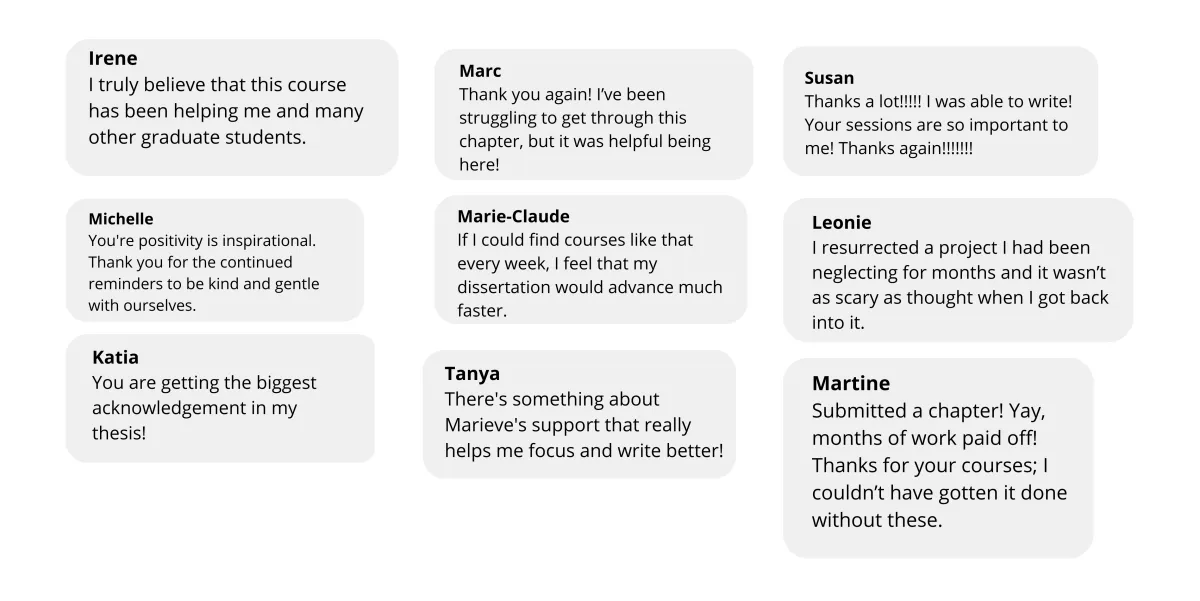
OUR AUDIENCE RAVES ABOUT THESE COURSES
If you are ready for:
✨ A clear structure for your chapter
✨ Knowing exactly what to write next
✨ Starting to write this week
✨ Feeling unstuck and moving forward
Then you’re ready for this framework.
Let’s turn your ideas into writing, one outline at a time.